

Consultation response
The Blog Financial reform for EU citizen
The digital euro could introduce a new form of public money for everyday payments. This article breaks down what it would change in practice, what would stay the same and how people in the EU would benefit.

The digital euro is front and centre in Brussels debates ranging from digital policy to geopolitics and European strategic autonomy.
For many, though, the question is simpler: what would the digital euro change in everyday life?
The digital euro has the potential to reshape how people pay in the eurozone. While it wouldn’t replace the financial services banks provide, it would give people a new electronic payment option that’s more widely accessible and less dependent on private providers.
To fully understand the digital euro, though, it starts with what changes and, importantly, what doesn’t.
In the eurozone today, cash is the only type of money issued by a central bank that people can hold directly. The sole form of money that’s guaranteed, your ability to use cash doesn’t depend on a private intermediary, and it’s always redeemable at face value. In today’s digital economy, the need for a public form of electronic money is growing.
The digital euro would be a form of public money issued by the European Central Bank, designed to provide an additional option for digital payments alongside private services. In simple terms, it would be the digital equivalent of cash.
Money held in a bank account is issued by a private institution. While it’s regulated and generally safe, it ultimately depends on the stability of the banking system.
Cryptocurrencies, meanwhile, are digital assets created by individuals or open source communities. Not backed by any central authority, they’re often highly volatile.
The digital euro would sit in a different category. Central bank-issued and backed by public authorities, it would add another layer to a system dominated by private digital payment providers.
While widely used, electronic payments don’t work in the same way for everyone. Being able to pay digitally mostly depends on having a bank account, relying on the provider to carry out basic onboarding, or meeting certain eligibility requirements, such as possessing the necessary identification and documentation.
For certain vulnerable groups, this means practical barriers. Maintaining an account can be difficult, if not impossible. A 2024 Finance Watch study found that in some EU Member States, nearly 31% of the population over the age of 15 did not own a bank account. One reason is that payment accounts, including basic ones, sometimes carry high fees.
Payment providers also charge merchants with transaction fees every time a customer makes a payment through the provider’s platform. These costs then pass to consumers via higher prices for goods and services, affecting millions in the EU at risk of poverty or social exclusion.
What’s more, not all digital payments are accepted everywhere, especially for low-value transactions, and current solutions may not function in the event of power outages or cyber attacks.
In a handful of European countries, current rules even allow merchants to lawfully not accept cash.
Taken together, these gaps point to the broader issue of payment resilience – reducing the number of points where access can fail and increasing choice in how people pay.
Despite efforts by some to undermine the digital euro, it could remedy these everyday difficulties faced by people across the EU.
As the digital euro’s payment infrastructure would be provided by the European Central Bank, merchant fees would be lower than those currently charged by private payment service providers, benefitting businesses and consumers alike.
Intermediaries would provide basic digital euro payment accounts, a lifeline for the unbanked in circumstances where cash isn’t an option.
Access to public money in digital form shouldn’t depend on specific providers or commercial conditions. That’s why the digital euro would function as part of the basic payment infrastructure. It would be available to all individuals and businesses in the eurozone, regardless of where they live or currently make payments.
Reflecting the role of cash, the digital euro would be designed to fit into daily life, with no advanced technical knowledge or financial expertise needed to access it.
In that sense, it can be understood in the same way as other essential services: public infrastructure such as transport or healthcare, both intended to be broadly accessible and not limited to specific users.
How people access the digital euro ultimately depends on the final legislative design decisions, still under discussion. But current proposals do shed light on how real-world participation could look.
The digital euro would function through a digital wallet, app or payment card. Designed to work in familiar ways, paying with digital euros would be similar to paying via mobile banking applications or other digital payment platforms.
You could use it to:

Image source: Adobe stock
While banks that offer payment accounts would be required to supply digital euro services, authorised public intermediaries would also provide access. Providers could include local and regional authorities and post offices, meaning users wouldn’t need a standard bank account.
With that in mind, some form of identification, verification and onboarding will likely be required, even if the process is meant to be easier and more accessible.
To promote financial inclusion, basic digital euro services are expected to be free for users, ensuring people’s ability to make digital payments isn’t hindered by fees or commercial conditions set by providers.
Accessibility features, such as voice-controlled transactions and large-font displays, aim to make digital payments simple and usable, including for the elderly, people with disabilities and those with limited digital skills.
Using the digital euro offline, without an internet connection, would be possible. By holding the currency locally on electronic devices, users could make payments during temporary power outages or in rural areas without reliable digital infrastructure.
In a consumer survey about the digital euro conducted across 10 EU countries by Finance Watch member BEUC, the European Consumer Organisation, a majority of respondents noted concerns about privacy violations, fraud and scams.
According to the European Commission, it’s being designed to combine strong security with different privacy levels depending on how it’s used.
For stakeholders like Finance Watch, a key benchmark is whether the digital euro can provide cash-like privacy for offline and low-value online transactions.
With online payments, personal data would be processed by payment service providers to successfully execute the transaction, and to prevent fraud and money laundering.
For offline payments, the level of privacy would be closer to cash. Much like withdrawing banknotes from an ATM, intermediaries would only have access to personal data needed for deposits to and withdrawals from accounts, and loading to and unloading from local storage devices. Importantly, they wouldn’t be able to access transaction information.
The European Central Bank would not have access to users’ personal transaction data, and would be supervised by independent supervisory authorities to ensure compliance with EU data protection rules.
The digital euro is being developed as a complement to cash, not a replacement. Cash would remain a core part of the eurozone payment landscape for those who wish to rely on it, and the digital euro would not change its status as legal tender.
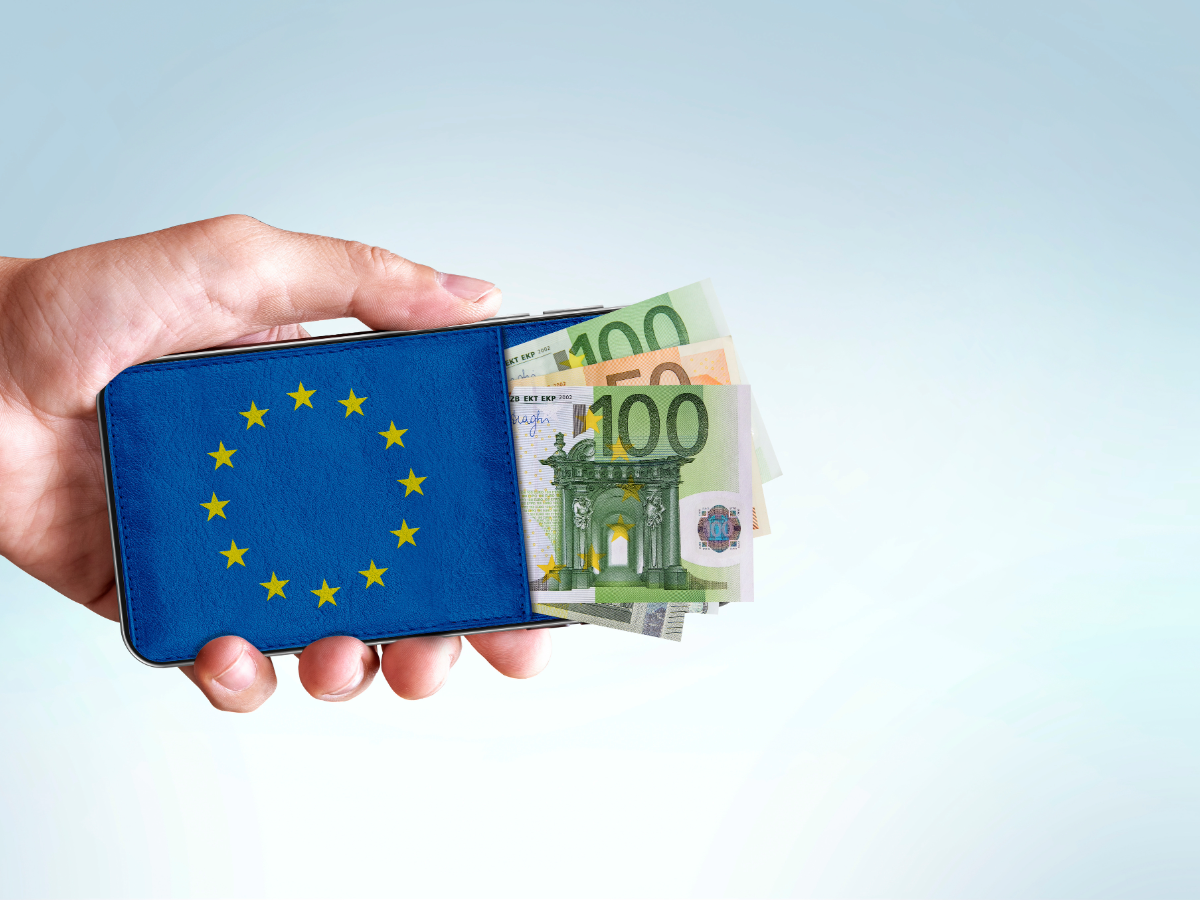
Image source: Adobe stock
The digital euro’s development simply reflects how payments systems evolve, introducing a way to use public money in digital payments without replacing existing methods.
In practice, people would have greater choice in how they pay depending on the situation, whether using cash, cards, bank transfers or digital wallets.
By introducing a public digital payment method that’s widely available and usable both online and offline, the digital euro would expand choice in how people in the EU make everyday payments.
Sitting alongside cash and private payment services, it would extend the role of public money to the digital realm. If adopted, it could strengthen resilience in situations where digital infrastructure is disrupted.
By allowing access through a physical payment card provided free of charge – a point emphasised by organisations like Finance Watch – the digital euro would ensure people lacking smartphones or the necessary digital skills are not excluded, vastly improving payment inclusivity.
What the digital euro wouldn’t change is the role of current payment methods. Cash would continue to exist and be widely accepted. Private payment services would remain part of the system. Commercial banks would continue to play a role in providing financial services.
In short, the digital euro is not about replacing how people pay today, but adding a public option alongside existing tools, making payments more accessible and resilient.
Want to understand how you can follow or influence the digital euro debate?
Share

Retail & Inclusion
Level:Beginner
03.07.2025

Digital Finance
Level:Beginner
21.11.2025

Sustainable Finance
Level:Beginner
21.04.2026
You can help tip the balance! Strengthen our impact by joining our collective efforts.